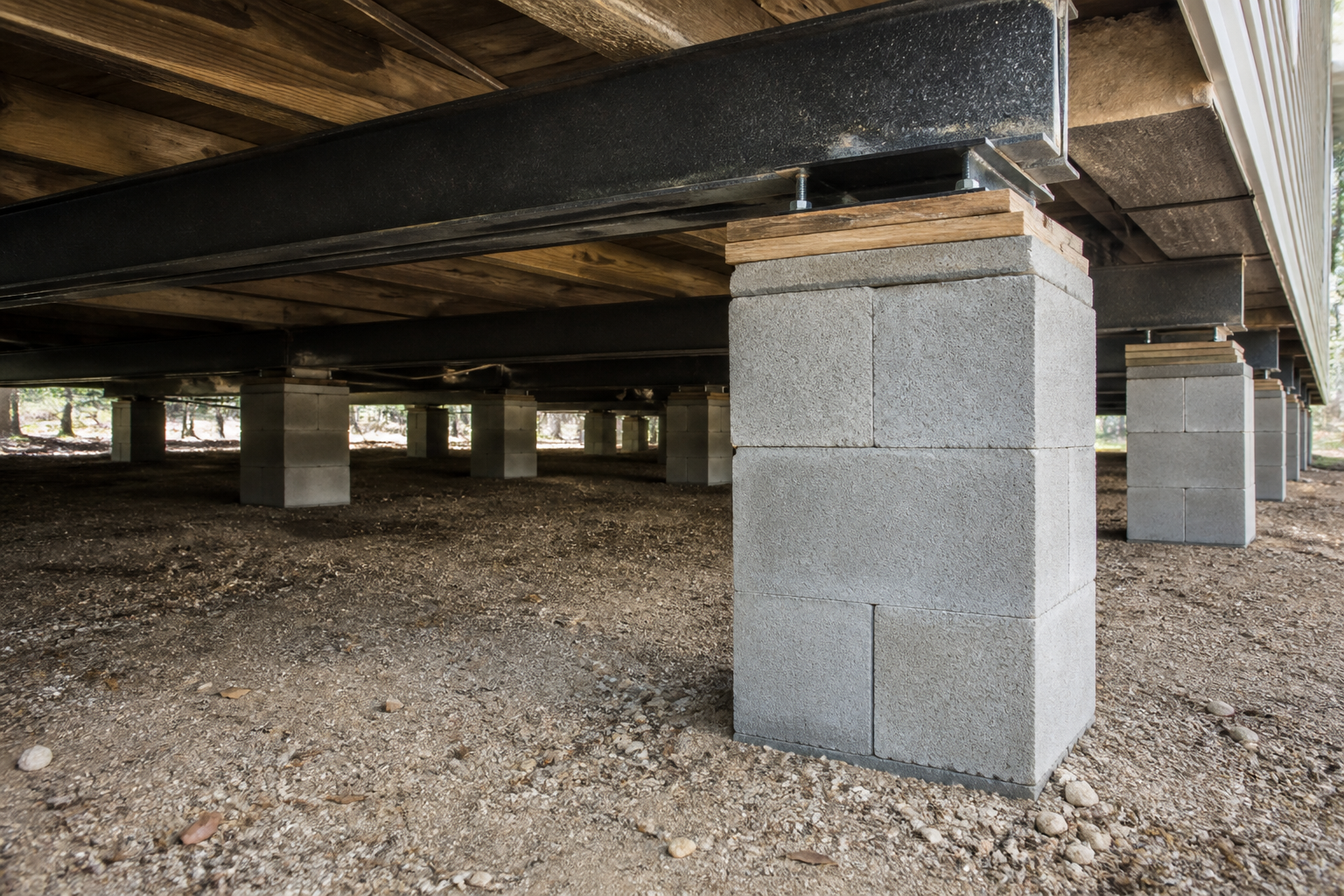
Piers
The Role of Piers Under a Manufactured Home
Piers help transfer the weight of the manufactured home from the frame or designated support points down to the bearing surface. When piers are properly arranged and stable, they help the home remain level and supported. When piers shift, lean, crack, settle, or lose contact, interior symptoms can follow.
Pier repair is not just cosmetic stacking. The condition of the pier, the cap or shim arrangement, the footing interface, and the ground beneath the pier all matter. Correcting one pier without understanding nearby support points can create uneven load transfer.
Problems
Common Pier Problems
- Leaning or out-of-plumb pier stacks
- Cracked, broken, or displaced blocks
- Poor bearing at the base of the support
- Loose, missing, or unstable shims
- Soft soil or erosion around the support
- Gaps between support components and frame contact
Pier problems often appear together with leveling symptoms. A home may feel unlevel because a support settled, but the support may have settled because drainage, soil, or bearing conditions changed. The repair plan should consider that sequence.
If a pier has moved significantly or if the home shows multiple support issues, the broader foundation repair page may be useful.
Repair Sequence
Why Support Correction Usually Comes Before Elevation Correction
It can be tempting to focus on the floor reading first. But if a pier is unstable, cracked, or poorly seated, adjusting the home without correcting the support path may be incomplete. The support must be capable of carrying the load after the home is brought closer to level. That is why evaluation looks for damage, alignment, bearing, and site conditions before deciding how to proceed.
Homeowners should not crawl under and attempt to jack, stack, or reset supports themselves. Manufactured homes are heavy, and support changes can affect other parts of the structure.
Water And Bearing
Pier Repair and Drainage
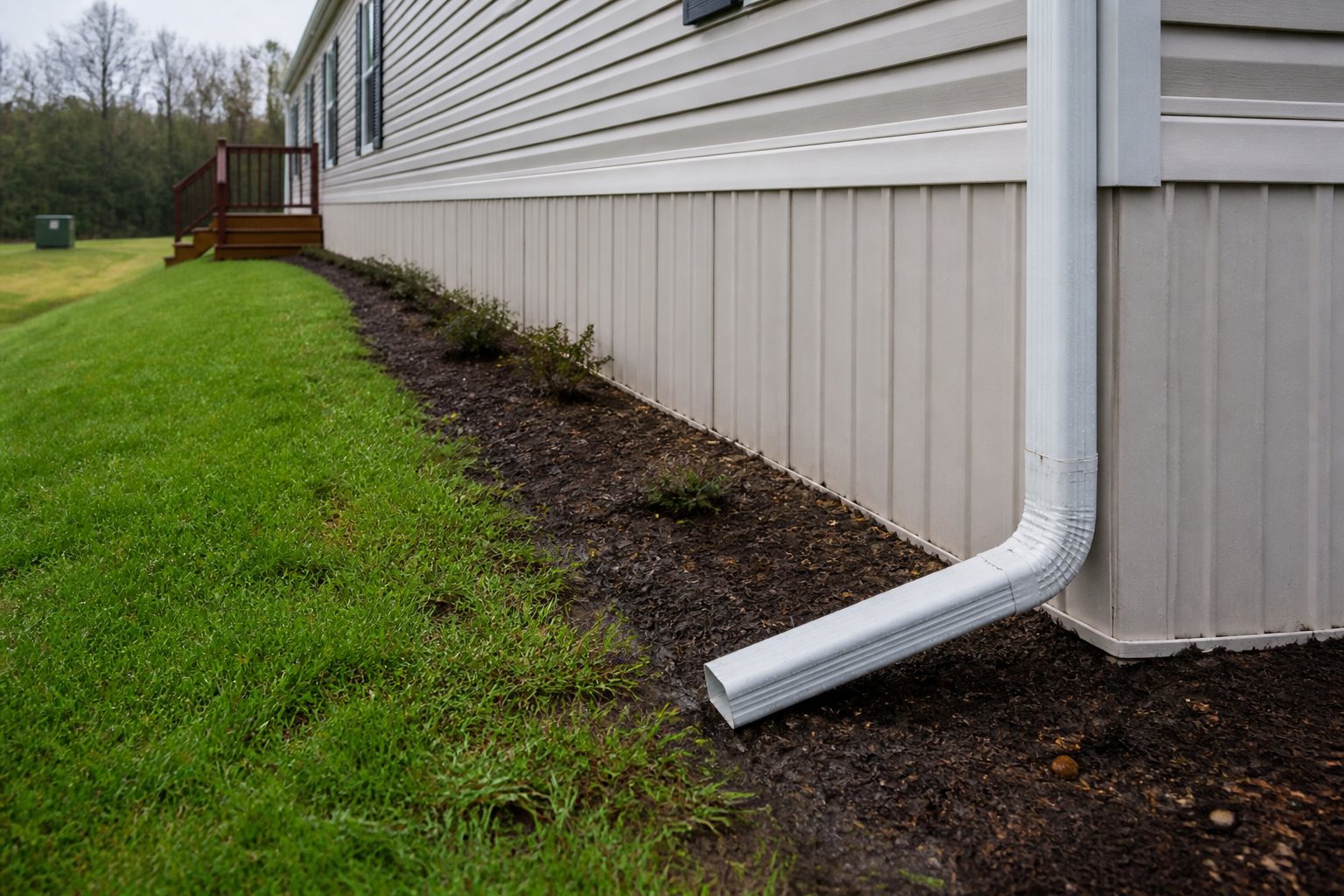
Water can matter around piers. Standing water may soften soil, erosion may remove bearing material, and repeated wetting can keep support areas unstable. On the other hand, a pier can also move because of setup, impact, age, or localized settlement unrelated to obvious drainage. A useful inspection avoids assuming one cause without looking.
When requesting service, mention whether the area under the home stays wet, whether downspouts discharge near the skirting, or whether symptoms changed after heavy rain.
Related Services
Ready For The Next Step?
Request a Pine Bluff area estimate.
Talk through the symptoms, home type, ZIP code, and any visible support or drainage concerns.
Homeowner Questions
FAQ
What happens if a pier is leaning?
A leaning pier may not be transferring load correctly. It should be evaluated along with nearby supports, footing or bearing conditions, and level symptoms.
Can pier repair be separate from leveling?
Sometimes. Pier repair may be needed before or during leveling, depending on the support condition and symptoms.
Should I restack blocks myself?
No. Changing supports under a manufactured home can be dangerous and can affect other parts of the structure.