Drainage
How Water Can Affect Manufactured-Home Supports
Manufactured-home supports depend on stable bearing. Water can change that stability when it collects near piers, softens soil, washes soil away, or keeps the under-home area damp. Gutters, downspouts, grading, erosion, and low spots all influence how water moves around the home.
Drainage concerns should be described carefully. Not every wet area causes settlement, and not every unlevel home is a drainage problem. The connection matters when water is affecting support points or appears along with movement symptoms.
A support system may remain stable through normal rain if water drains away. The concern grows when water repeatedly collects near the same pier line, when soil visibly washes out, or when new leveling symptoms appear after site drainage changes.
Clues
Common Drainage Clues
- Standing water near skirting or under the home
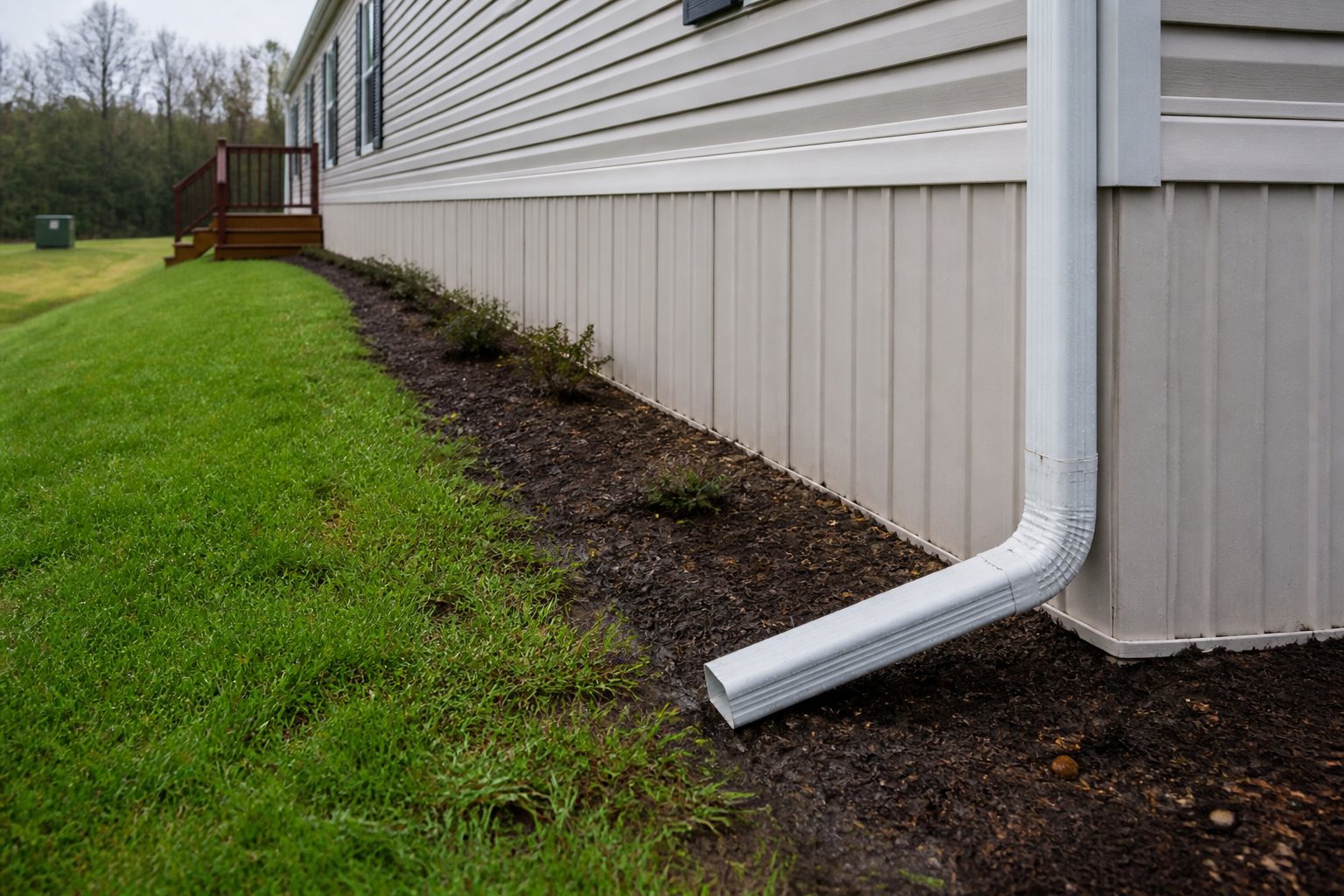
- Downspouts discharging beside support areas
- Soil washed away near piers or blocks
- Soft, muddy, or low areas beneath part of the home
- Symptoms that appear or worsen after heavy rain
- Skirting movement near wet or eroded areas
Water Paths
Gutters, Downspouts, Grading, and Skirting
Water does not need to flood a home to matter. A short downspout that dumps water at the skirting can keep one support area wetter than the rest of the lot. Grading that slopes toward the home can send runoff under the structure. Low spots can hold water after a storm. Damaged or displaced skirting can also change how water and air move around the under-home area.
These conditions do not prove that the home needs leveling. They are site clues. When those clues appear with sticking doors, sloping floors, shifted blocks, leaning piers, or skirting movement, they are worth describing during an estimate request.
Careful Diagnosis
When Drainage Is Only Part of the Story
A manufactured home can become unlevel because of settlement, support movement, deteriorated components, previous repairs, or site changes that are not obviously related to water. Drainage should be considered, not blamed automatically. A careful evaluation asks whether water is actually affecting support points or whether a different issue is more likely.
For example, one room with a soft floor may be a flooring or subfloor issue rather than whole-home settlement. A single sticking door may need door adjustment. But when water clues and support clues appear together, the foundation discussion becomes more important.
Correlation is not proof. Drainage can contribute to support movement, but the repair scope should be based on inspection of the home and site, not assumptions.
Repair Connection
Drainage, Leveling, and Foundation Repair
If water contributes to support movement, leveling may need to be paired with support correction or drainage improvements. If drainage is present but supports remain stable, the leveling issue may have another cause. A careful evaluation avoids overstating the relationship either way.
Homeowners can mention visible drainage clues when requesting service. They should avoid crawling into wet, unstable, or low-clearance areas to investigate. Related pages on foundation repair, foundation inspection, and why homes become unlevel explain how drainage fits into the larger support picture.
Ready For The Next Step?
Request a Pine Bluff area estimate.
Talk through the symptoms, home type, ZIP code, and any visible support or drainage concerns.
Homeowner Questions
FAQ
Does every drainage problem cause foundation failure?
No. Drainage should be evaluated carefully and not overstated. It matters most when water affects support points or appears with movement symptoms.
Are gutters and downspouts relevant?
Yes. Where water discharges can affect soil moisture and erosion near the home.
Can drainage be separate from leveling?
Yes. Drainage may need separate correction even if leveling is also needed, depending on the site.