Process
A High-Level Process, Not a DIY Tutorial
Mobile home leveling involves a heavy structure and a support system that should be evaluated carefully. This page explains what homeowners can expect from a service process. It is not a set of instructions for jacking, shimming, or supporting the home yourself.
Steps
From First Call to Verification
- Discuss symptoms, home type, ZIP code, timing, and visible support or drainage concerns.
- Review access needs, including skirting, clearance, ground conditions, and safety concerns.
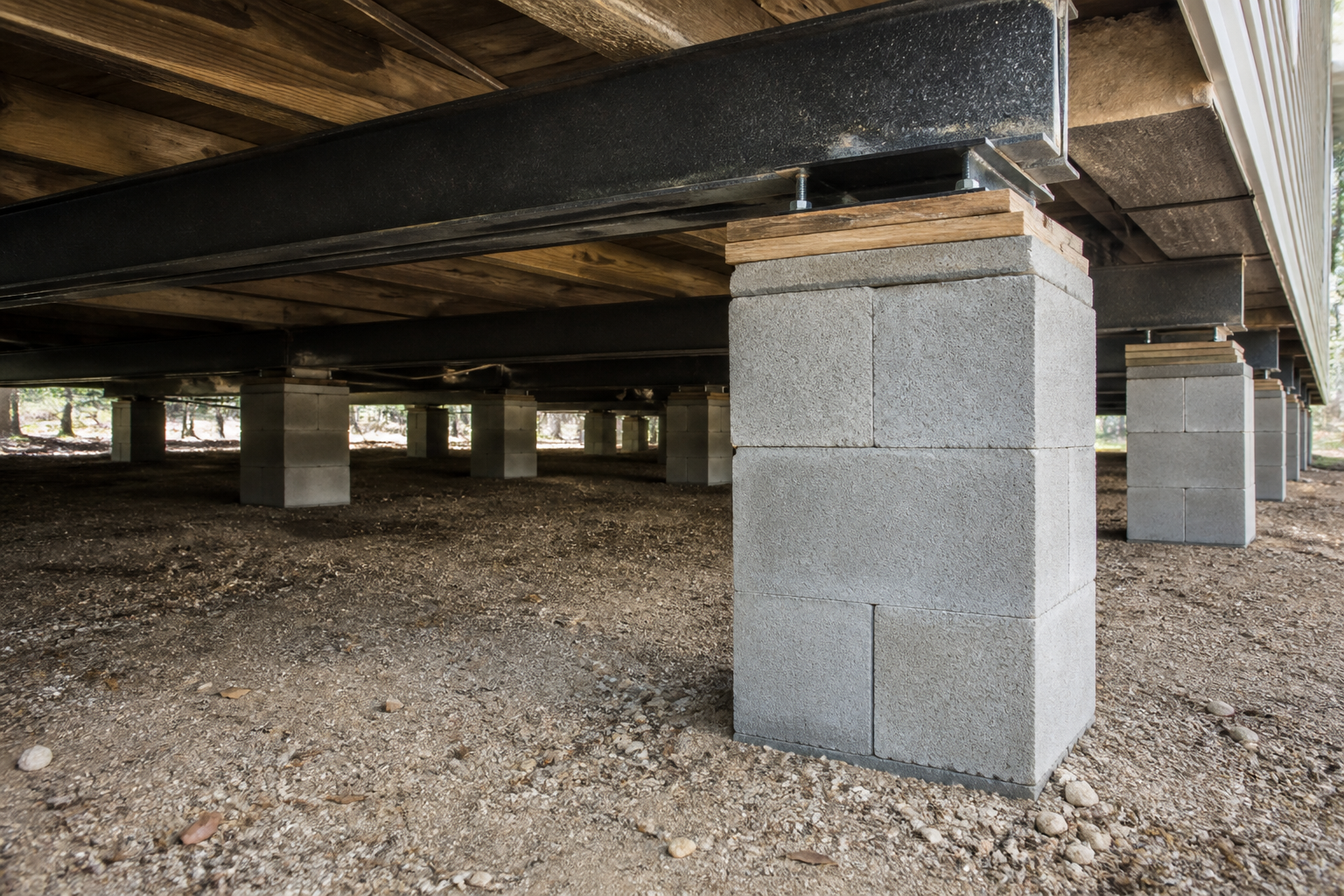
- Inspect accessible support areas and look for shifted or damaged components.
- Assess level at multiple points instead of relying on one door or one room.
- Consider drainage, soil, erosion, and site conditions that may affect support stability.
- Explain the corrective scope and whether leveling, support repair, or both are appropriate.
- Perform approved work and avoid unsupported changes outside the agreed scope.
- Verify results and discuss monitoring or future site concerns.
Preparation
What Homeowners Can Prepare
Make a short list of symptoms and where they occur. Note when you first noticed them and whether they changed after rain, dry weather, plumbing issues, or work around the home. Know whether the home is single-wide, double-wide, multisection, or not sure. If access under the home is blocked by stored items or loose skirting, mention that when scheduling.
Do not remove structural components, crawl into unsafe areas, or attempt to lift the home. Clear information is helpful; risky preparation is not.
- Home type and approximate size
- ZIP code and service area
- Main symptoms and when they started
- Known drainage or water concerns
- Visible pier, block, or skirting changes
Follow-Up
After Leveling Work
After approved correction, some doors or trim may still need ordinary adjustment if they were damaged or changed over time. Leveling addresses support and elevation, not every finish item inside the home. If drainage or site conditions contributed to movement, those issues may need monitoring or separate correction to reduce future movement.
Ready For The Next Step?
Request a Pine Bluff area estimate.
Talk through the symptoms, home type, ZIP code, and any visible support or drainage concerns.
Homeowner Questions
FAQ
Is this a DIY guide?
No. It explains the service process for homeowners and avoids unsafe jacking or support instructions.
What should I prepare before calling?
Know the home type, ZIP code, symptoms, timing, and whether there are visible support or drainage concerns.
Does leveling fix finish damage?
Leveling addresses support and elevation. Doors, trim, flooring, or cabinets may still need ordinary repair if they were damaged.