Inspection
What a Foundation Inspection May Include
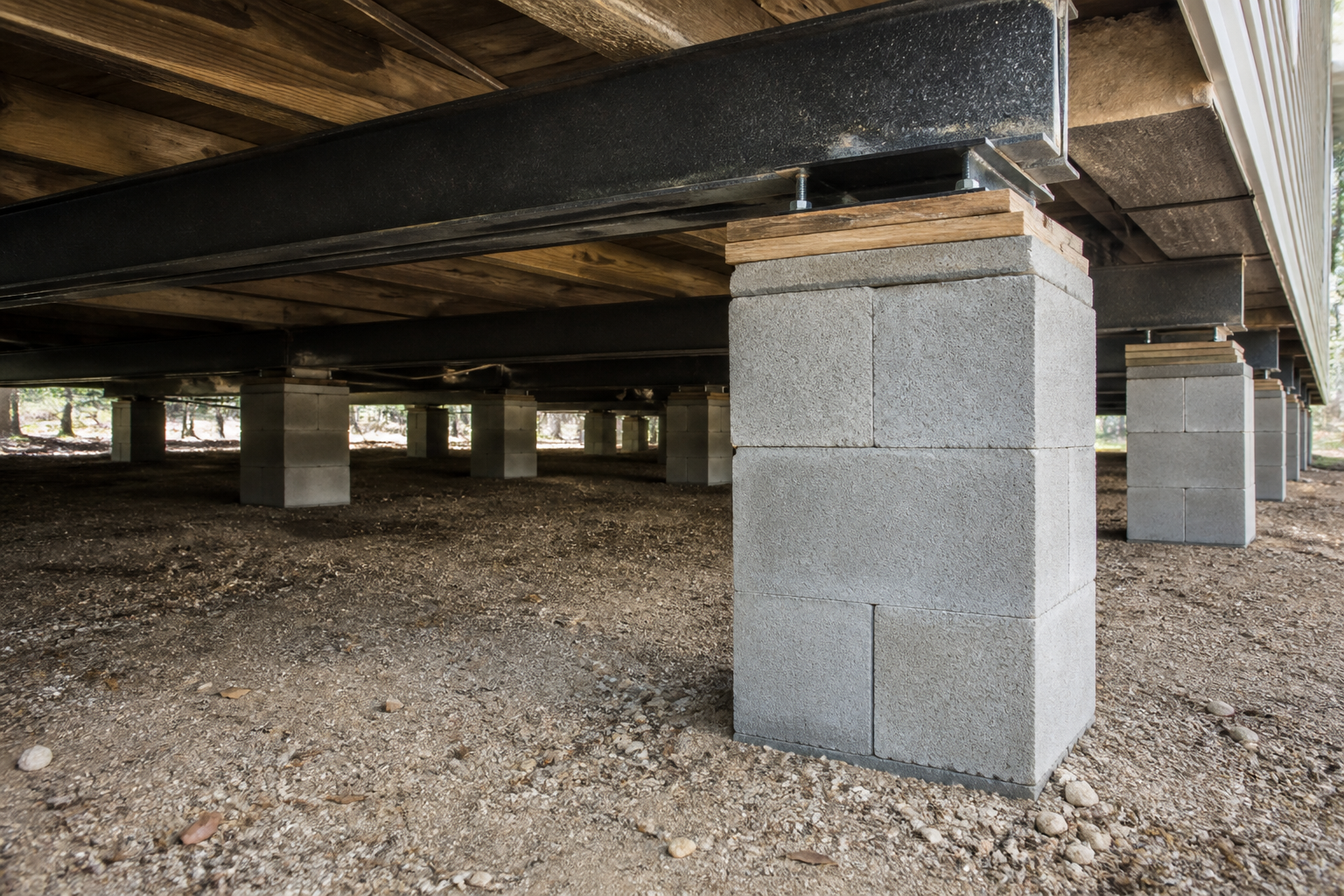
A mobile home foundation inspection looks at the support system and related site conditions. It may include accessible piers, blocks, caps, shims, frame contact points, skirting, drainage, moisture clues, erosion, and symptoms inside the home. The goal is to understand what the home is telling you before choosing a corrective scope.
This kind of inspection is especially useful when symptoms do not point neatly to one cause. A floor may slope because a support settled, because a localized floor area is damaged, because a previous repair changed load transfer, or because drainage has affected one part of the home. Looking at symptoms and supports together helps avoid guessing.
The inspection should be limited to safe and accessible areas. Low clearance, standing water, damaged skirting, animals, debris, or unstable ground can affect what can be checked during an initial visit.
Checks
Support, Frame, and Site Checks
Inspection may focus on whether supports appear plumb and stable, whether blocks or piers are damaged, whether shims are seated, whether support contact is consistent, and whether the frame is properly supported where it should be. Site checks may include water flow, standing water, soft soil, erosion, low clearance, or debris that affects access.
If significant structural damage, unusual site conditions, flood hazards, or safety concerns are present, broader professional or local-authority input may be appropriate.
- Accessible pier and block condition
- Frame support and contact points
- Footing or bearing concerns
- Drainage and erosion clues
- Single-wide or double-wide layout considerations
Preparation
What a Homeowner Can Share Before the Visit
Useful details help the inspection start faster. Note whether the home is single-wide, double-wide, or not sure. Write down which doors, windows, or rooms changed first. Mention whether symptoms followed rain, dry weather, a plumbing leak, skirting work, yard work, or a previous support repair.
If you can see a problem from outside the skirting, describe it. If the area is unsafe or tight, do not crawl under the home for a photo. A clear description is better than a risky inspection attempt.
- Home type and approximate age if known
- Rooms where floors slope or doors stick
- Visible skirting, pier, block, or shim movement
- Drainage, standing water, erosion, or soft ground
- Recent plumbing, grading, or storm-related changes
Limits
What Inspection Is Not
A foundation inspection is not a promise that every visible symptom is structural. It is also not a substitute for engineering review when the home has major frame damage, unusual site hazards, flood-related concerns, or other conditions outside ordinary leveling and support repair. The inspection helps decide whether the next step is leveling, support repair, drainage attention, anchoring review, monitoring, or a broader professional opinion.
It is also not a do-it-yourself manual. Homeowners should not jack, shim, restack, or alter support components based on a web page. Manufactured homes are heavy, and support changes can affect other areas of the structure.
Scope
How Inspection Leads to a Repair Scope
An inspection can result in several paths. The home may need leveling, releveling, pier repair, block and support repair, drainage discussion, anchoring review, or no immediate structural service. The value is in matching the recommendation to the evidence, not forcing every symptom into the same repair category.
For related reading, see foundation repair, pier repair, and drainage problems.
Ready For The Next Step?
Request a Pine Bluff area estimate.
Talk through the symptoms, home type, ZIP code, and any visible support or drainage concerns.
Homeowner Questions
FAQ
What does an inspection look at?
Accessible supports, frame contact, piers, blocks, shims, drainage, erosion, and related interior symptoms may be considered.
Can an inspection say no repair is needed?
Yes. The goal is to match recommendations to evidence, not force every symptom into the same repair.
Should I remove skirting first?
Ask before making changes. Access matters, but homeowners should not create unsafe conditions or damage the home.