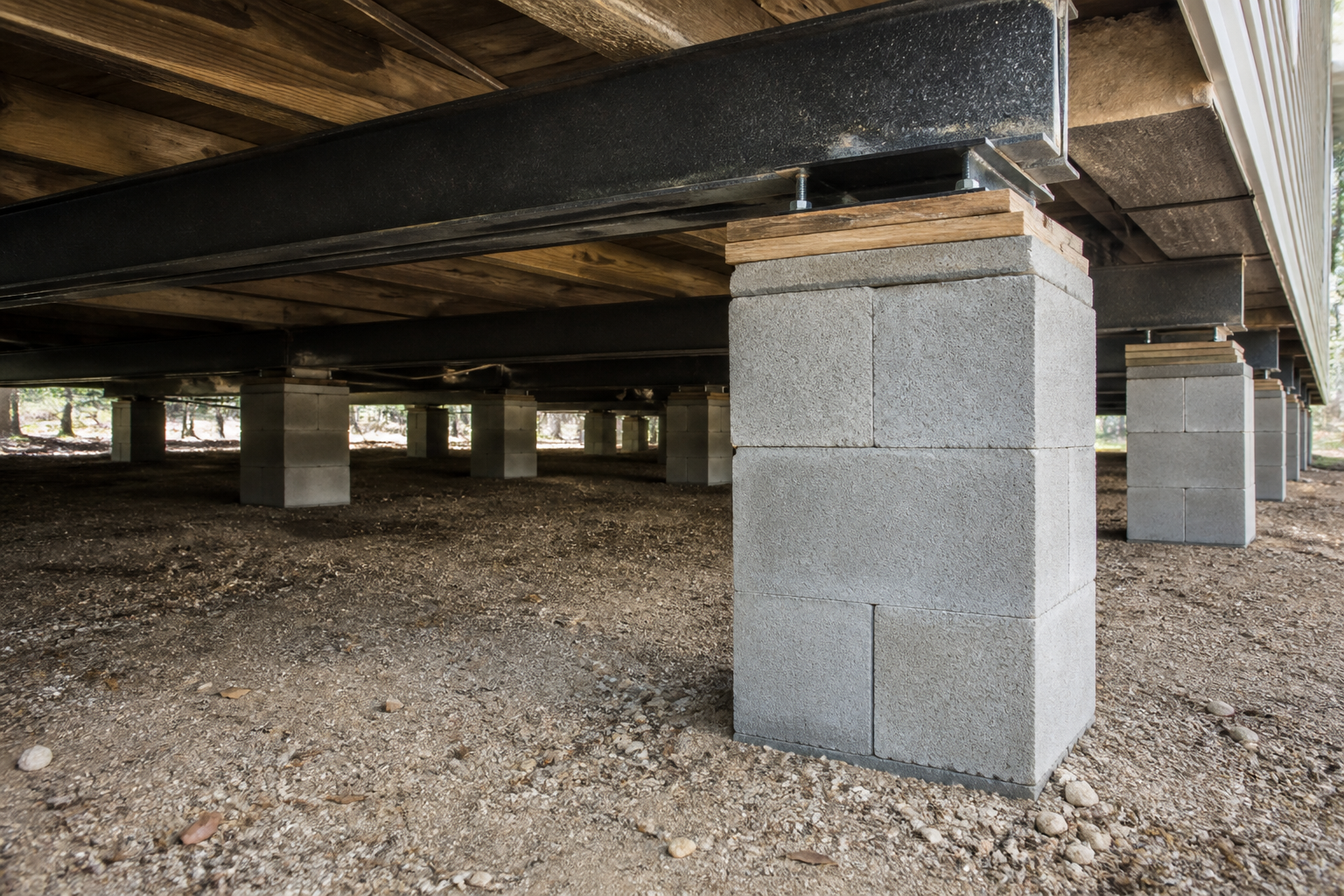
Blocks
Block and Support Repair for Manufactured Homes
Concrete masonry blocks are often part of a manufactured-home support system. They may be used with caps, shims, pads, or other components depending on the home and installation requirements. When blocks are properly positioned and supported, they help transfer load to the ground. When they shift, crack, lean, or lose proper contact, leveling and foundation symptoms can follow.
Block and support repair is about the whole support path, not just the visible block. The repair conversation may include the block condition, cap placement, shim condition, footing interface, soil bearing, and whether the frame is properly supported at the intended point.
What To Look For
Common Support Concerns
- Blocks that are tilted, cracked, or rotated
- Improper positioning under frame contact points
- Missing, loose, crushed, or unstable shims
- Caps or bearing plates that are not seated correctly
- Soft ground, erosion, or uneven footing contact
- Support lines that do not match the symptoms inside the home
Do not attempt support changes casually. Jacking or restacking a manufactured home without the right equipment and scope can be dangerous and can transfer stress to other parts of the home.
Leveling Connection
How Block Problems Relate to Leveling
A home can become unlevel when one support drops, but it can also feel uneven when a support loses solid contact or when a block stack is no longer stable. Interior symptoms may include floor slope, doors that bind, trim separation, or cabinet alignment changes. Exterior symptoms may include shifted skirting, visible leaning, or a support that no longer looks straight.
Sometimes the answer is releveling with support correction. Sometimes damaged supports should be repaired before final level adjustments are made. The leveling process page explains how scope is typically determined.
Bearing Conditions
Footings, Soil, and Drainage
Blocks and piers need stable bearing. If the base of a support is sitting on soft soil, an inadequate pad, or an area affected by water, the support may continue to move. Drainage, erosion, site grading, and under-home moisture can all be part of the discussion. A support repair that ignores a recurring site condition may not solve the homeowner's long-term problem.
Related Services
Mobile Home Leveling
Evaluation and correction planning for manufactured homes with sloping floors, sticking doors, shifted supports, or settlement symptoms.
Foundation Repair
Manufactured-home foundation and support repair guidance focused on piers, blocks, frame support, soil bearing, and drainage.
Pier Repair
Help with leaning, displaced, cracked, poorly seated, or unstable pier supports beneath a mobile or manufactured home.
Ready For The Next Step?
Request a Pine Bluff area estimate.
Talk through the symptoms, home type, ZIP code, and any visible support or drainage concerns.
Homeowner Questions
FAQ
What are signs of block support problems?
Visible tilt, cracked blocks, shifted skirting, gaps near supports, uneven floors, or doors and windows binding can all justify evaluation.
Are shims bad?
No. Shims can be part of a support system, but they need to be appropriate, stable, and used with sound supports.
Can drainage move block supports?
Water can contribute to erosion or soft bearing areas. It should be considered when support movement is present.