Local Leveling
Mobile Home Leveling in Pine Bluff
Mobile home leveling, often called manufactured home releveling, is the process of evaluating how the home is sitting on its support system and correcting elevation differences where appropriate. A manufactured home is built on a frame, set on piers or blocks, and supported at specific bearing points. When those supports settle, shift, deteriorate, or lose solid contact, the home can begin to feel different inside.
Homeowners usually notice the living-space symptoms first: floors slope in one direction, doors rub the jamb, windows become harder to open, trim separates, or cabinets do not line up the way they used to. Those symptoms matter, but they do not automatically prove the solution is simply adding shims. The support condition underneath the home matters just as much as the level reading inside the home.
A useful leveling evaluation looks at both sides of the problem. One question is whether the home is out of level. The other is why. Settlement, drainage, soil movement, moved blocks, weak bearing points, damaged piers, and previous repairs can all affect the scope of correction.
- Uneven or sloping floors
- Doors that stick, swing, or will not latch
- Windows that bind or feel twisted
- Visible pier, block, shim, or skirting movement
- Changes after heavy rain, dry weather, or drainage problems
Good leveling work starts with diagnosis. Correcting the level without understanding the support and site conditions can leave the same problem waiting to return.
Supports
Mobile Home Foundation & Support Problems
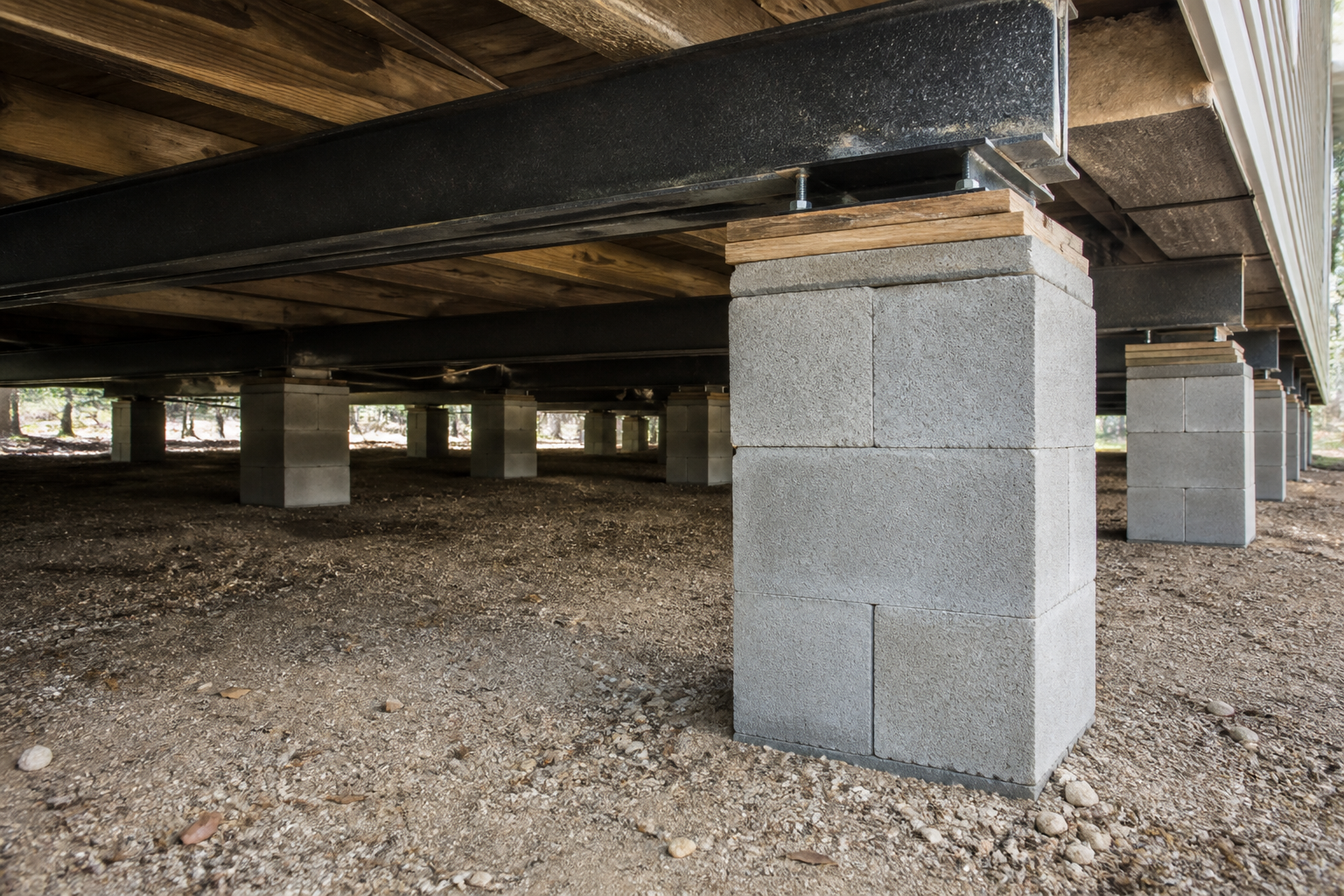
Manufactured-home foundation repair is different from generic slab foundation work. The home is commonly supported by piers, concrete masonry blocks, caps, wedges, shims, footings, and frame contact points. Each part has a job. The frame needs consistent support. Blocks need solid bearing. Shims need to hold contact without creating unstable stacking. Soil and drainage conditions need to be considered because water can change the way the ground carries weight.
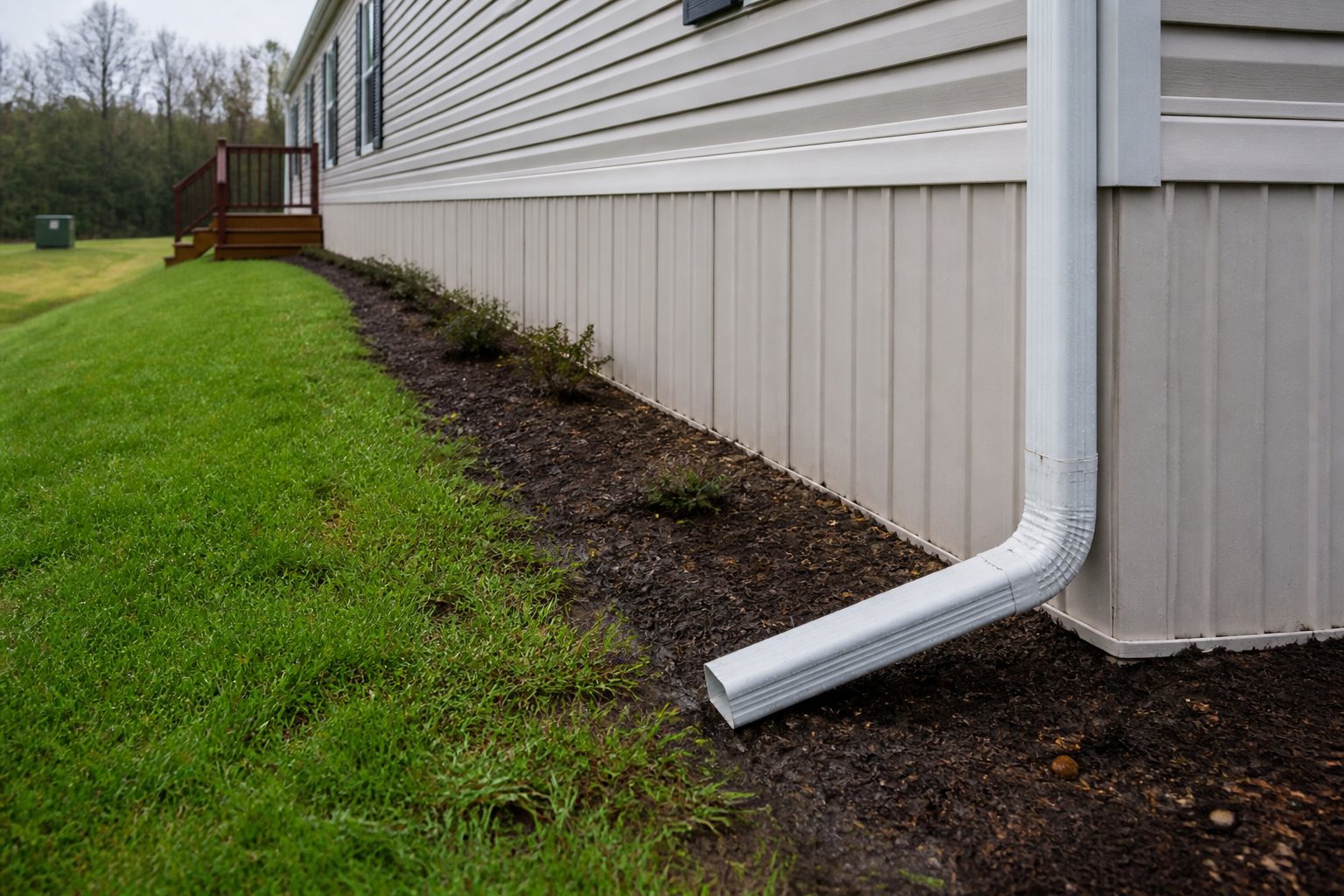
Moisture is especially important to watch. Standing water, poor grading, clogged downspouts, erosion, or soft soil around supports can contribute to movement. That does not mean every drainage issue causes foundation failure, and it does not mean every floor symptom is structural. It does mean the area under and around the home deserves attention before a repair scope is chosen.
Homeowners should avoid dangerous do-it-yourself jacking or support changes. Manufactured homes are heavy, and changing one point can affect other points. The safer path is to request an evaluation that looks at accessible supports, level readings, damaged components, and site conditions together.
What We Help With
Services
Use the service pages below to learn how each problem is evaluated and how it relates to leveling, support repair, and manufactured-home foundation performance.
Mobile Home Leveling
Evaluation and correction planning for manufactured homes with sloping floors, sticking doors, shifted supports, or settlement symptoms.
Learn about leveling service Settled HomesMobile Home Releveling
Service information for homes that were once level but have moved because of moisture changes, support movement, erosion, or age.
Learn about releveling Support SystemFoundation Repair
Manufactured-home foundation and support repair guidance focused on piers, blocks, frame support, soil bearing, and drainage.
Learn about foundation repair PiersPier Repair
Help with leaning, displaced, cracked, poorly seated, or unstable pier supports beneath a mobile or manufactured home.
Learn about pier repair BlocksBlock & Support Repair
Information about concrete block supports, caps, shims, bearing points, alignment, and under-home support concerns.
Learn about block support repair AnchoringTie-Downs & Anchoring
Plain-English guidance about manufactured-home anchoring, frame ties, missing or deteriorated components, and Arkansas requirements.
Learn about anchoring Single SectionSingle-Wide Leveling
Leveling and support considerations for single-section homes, including access, pier lines, drainage, and visible symptoms.
Learn about single-wide leveling MultisectionDouble-Wide Leveling
Leveling guidance for double-wide and multisection homes where marriage-line alignment, interior symptoms, and support coordination matter.
Learn about double-wide levelingSymptoms
Signs Your Mobile Home May Need Leveling
One small symptom may be cosmetic, seasonal, or related to a door or window adjustment. Several symptoms appearing together are more meaningful. The strongest clues usually show up across different parts of the home: floors, openings, trim, cabinets, exterior skirting, and visible support components.
Sticking doors are common. A door may rub because the frame has shifted, because hinges are worn, or because humidity has swollen the material. But when several doors begin sticking, when doors open or close on their own, or when a nearby floor slopes, a leveling evaluation becomes more reasonable.
Floor movement can also have several causes. Soft flooring, subfloor damage, moisture, or localized framing issues can feel different from whole-home unlevel conditions. A good evaluation separates a support issue from a surface flooring issue before deciding on repair.
Read the full symptom guide for a room-by-room explanation.
- Doors opening or closing without help
- Windows difficult to raise, lower, or lock
- Uneven floors, dips, bounce, or rolling objects
- Trim separation or cracks near openings
- Cabinet, counter, or interior wall misalignment
- Skirting movement or visible leaning outside
- Shifted blocks, leaning piers, or loose shims
- New symptoms after heavy rain or long dry periods
Causes
Why Mobile Homes Become Unlevel
Manufactured homes can move for ordinary reasons and for preventable site reasons. Normal settlement may happen after setup as soil compresses under support points. Seasonal moisture changes can make some soils swell, soften, shrink, or lose bearing capacity. Water running toward the home can erode soil around supports. Dry weather can change the ground in a different way.
Support condition matters too. Blocks can shift, piers can lean, wood components can deteriorate, caps can lose position, and previous repairs can leave uneven bearing. Extreme weather, changes to nearby grading, new drainage patterns, removed skirting, plumbing leaks, and inadequate initial setup can all change how the home is supported.
The practical takeaway is simple: the home may need leveling, but the cause should be considered. Releveling that ignores drainage, erosion, or damaged supports may not last as well as a correction that addresses the underlying condition.
Local Conditions
Pine Bluff and Southeast Arkansas Context
Pine Bluff and nearby Jefferson County include a mix of city lots, rural properties, manufactured-home communities, and homes on private land. Site conditions can vary widely even across a short distance. One property may drain well and another may hold water near the skirting. One home may have firm, visible support points and another may have limited access or soft ground under part of the structure.
In Southeast Arkansas, homeowners are often wise to pay attention to drainage, downspout discharge, standing water, and changes after wet or dry weather. This is not a claim about any specific property's soil. It is a practical reminder that manufactured-home supports depend on the ground and components beneath them.
When a Pine Bluff area homeowner calls about leveling, the conversation should include the symptom, the home type, when the symptom appeared, and whether water or visible support movement is part of the picture.
Process
What Happens During a Leveling Evaluation?
A professional evaluation is not a homeowner DIY tutorial. It is a structured way to understand the symptoms, supports, access, and corrective scope before work is approved.
- Discuss symptoms, home type, recent changes, and whether the home is single-wide or multisection.
- Inspect accessible support areas where skirting, clearance, and safety allow.
- Assess level at multiple points instead of relying on a single room or doorway.
- Look for shifted, damaged, missing, or poorly seated support components.
- Consider drainage, erosion, moisture, and site conditions that could affect supports.
- Determine whether leveling alone is appropriate or whether support repair is also needed.
- Perform approved work with attention to the support system as a whole.
- Verify results and discuss any related concerns that should be monitored.
Home Type
Single-Wide vs Double-Wide Leveling
A single-wide manufactured home is one section, so evaluation often focuses on support lines, frame contact, end-to-end level, side-to-side readings, access, and localized support movement. A single section can still have complex problems, especially when one side has settled more than the other or drainage is affecting only part of the home.
A double-wide or multisection home adds another layer: two or more sections must work together. The marriage line, interior openings, floor transitions, roofline clues, and coordinated support under both sections all matter. A level difference between sections can create symptoms that feel different from a single-section home.
Home type affects evaluation. When requesting service, say whether the home is single-wide, double-wide, multisection, or not sure. That helps with scheduling and scope discussion.
Cost
How Much Does Mobile Home Leveling Cost in Pine Bluff?
There is no responsible fixed local price that fits every manufactured home. Cost depends on home size, single-wide versus multisection layout, accessibility, number and condition of supports, amount of adjustment, damaged components, soil and drainage conditions, and whether additional repairs are needed.
A straightforward releveling visit may be different from a job that includes pier repair, block replacement, drainage-related settlement, poor clearance, or damaged support components. Travel and service location can also affect the estimate.
The most useful next step is to describe the symptoms and request a Pine Bluff area estimate. For more detail, read the mobile home leveling cost guide.
- Home size and configuration
- Number of support points needing attention
- Access beneath the home
- Damaged piers, blocks, caps, or shims
- Drainage, erosion, or site conditions
- Additional structural or support repairs
Nearby Communities
Service Area
Service requests are centered on Pine Bluff with surrounding Southeast Arkansas communities considered by location and scheduling. Common nearby areas include White Hall, Star City, Dumas, Stuttgart, and Sheridan. Homeowners just outside those listed areas can still contact the site to discuss availability.
Ready For The Next Step?
Request a Pine Bluff area estimate.
Talk through the symptoms, home type, ZIP code, and any visible support or drainage concerns.
Homeowner Questions
FAQ
How do I know if my mobile home is unlevel?
Look for groups of symptoms: floors that slope, doors that rub or swing, windows that bind, trim separation, cabinet misalignment, skirting movement, or visible support changes. One symptom may have another cause, but several together justify an evaluation.
How often should a mobile home be checked for level?
There is no universal schedule for every home. A check is reasonable when symptoms appear, after drainage or site changes, after significant settlement concerns, or when buying a used manufactured home.
Why do my doors suddenly stick?
Doors can stick because of humidity, hinge issues, frame movement, support settlement, or floor changes. If several doors suddenly stick or doors stick along with floor slope, ask about a leveling evaluation.
Can heavy rain affect mobile-home leveling?
Heavy rain can affect support areas if water collects, softens soil, or causes erosion. It does not automatically mean the home is unlevel, but timing after rain is useful information.
Can a double-wide be releveled?
Yes, double-wide and multisection homes can be evaluated for releveling. The marriage line, section-to-section level, and support under both sections should be considered.
How long does mobile-home leveling take?
Timing depends on home size, access, amount of adjustment, and whether support repairs are needed. A simple evaluation and correction is different from a job with damaged piers or drainage-related settlement.
Does leveling fix damaged piers?
Not by itself. Leveling may correct elevation, but damaged or unstable piers may need repair as part of the scope.
How much does mobile-home leveling cost?
Cost depends on home size, access, support condition, amount of movement, drainage, and related repairs. A Pine Bluff area estimate is the responsible way to price the work.
Should I try to level a mobile home myself?
No. Manufactured homes are heavy and support changes can be dangerous. This site provides homeowner education, not DIY jacking instructions.
Does Arkansas have requirements for manufactured-home supports and anchoring?
Yes. Arkansas rules address installation and anchoring. Requirements can change and homes differ, so verify current requirements with the Arkansas Manufactured Home Commission or local authority.