Leveling Basics
What Mobile Home Leveling Means
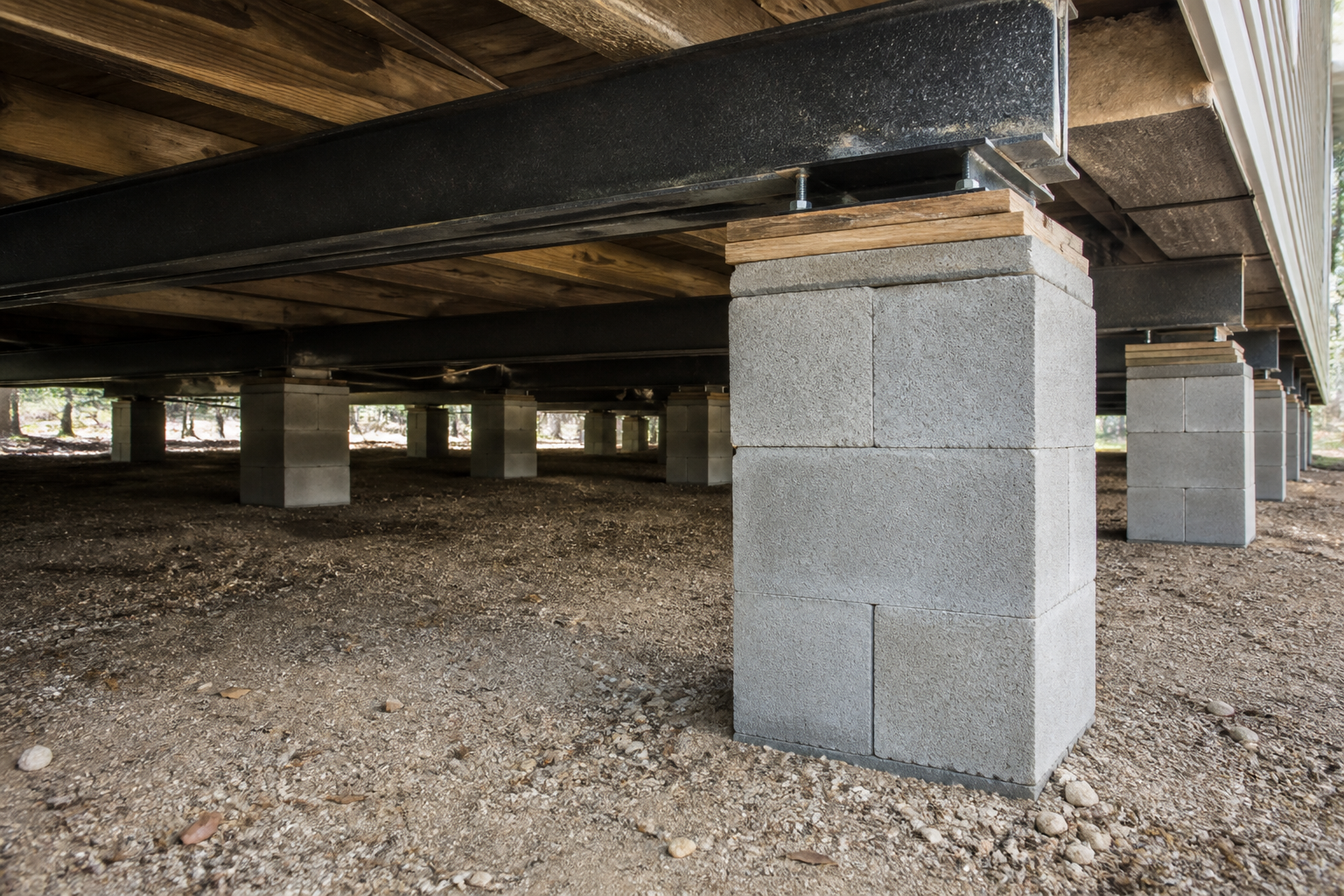
Mobile home leveling is the process of checking whether a manufactured home is sitting evenly on its support system and correcting elevation differences where appropriate. The word leveling sounds simple, but the work depends on how the home is supported. A manufactured home is carried by its frame and transferred to the ground through piers, blocks, footings, caps, shims, and other support components.
When one area settles, shifts, or loses contact, the symptoms may show up far away from the actual support issue. A door that sticks at the front of the home may be connected to frame movement, pier movement, floor issues, moisture, or a door-specific problem. That is why a leveling evaluation should not begin and end with one symptom.
For Pine Bluff area homeowners, the goal is to understand whether the home is out of level, what may have caused the condition, and whether releveling alone is enough or whether support, pier, block, or drainage concerns also need attention.
- Level readings at more than one point
- Accessible pier and block conditions
- Frame contact and support alignment
- Signs of moisture, erosion, or poor drainage
- Differences between single-wide and double-wide homes
Symptoms
Symptoms That Make an Evaluation Worthwhile
The most common service calls begin with uneven floors, doors that will not latch, windows that bind, trim gaps, cracks near openings, cabinet misalignment, or exterior clues such as skirting movement. One symptom alone may have a small cause. Several symptoms across different rooms are stronger evidence that the support system should be checked.
Homeowners sometimes notice a sudden change after heavy rain, after a plumbing leak, after a dry stretch, or after work has been done around the home. Those timing clues are useful. They can help separate long-term settlement from a newer site or support change.
Read the full signs guide if you are trying to decide whether your symptoms are worth discussing before scheduling.
Support System
Why Adding Shims Is Not Always the Whole Answer
Shims and wedges can be part of manufactured-home support, but simply adding material at one point does not solve every leveling problem. The support underneath has to be stable. If a pier is leaning, a block is cracked, the soil under a footing is soft, or water is washing out around a support, adding height may not address the cause.
Good correction looks at the support path from the home frame down to the bearing surface. That may include the frame contact, cap, shim, block or pier stack, footing interface, and the soil or pad beneath. The scope depends on what is found during evaluation.
Water Around The Home
Drainage and Site Conditions
Drainage is not a separate topic from leveling. Water that collects near supports can soften soil, move fines, create erosion, or keep areas damp for long periods. On the other hand, not every wet area means the home has a foundation problem. The important question is whether drainage is affecting the support points or contributing to movement.
During a leveling evaluation, it is reasonable to note standing water, downspouts discharging near skirting, soil washing away, low areas under the home, or changes that appear after storms. The drainage guide explains this relationship in more detail.
Evaluation
What Homeowners Can Expect
- Share the symptoms, home type, location, and any visible support concerns.
- Allow accessible under-home areas to be checked where conditions are safe.
- Discuss whether the issue appears to be leveling, support repair, drainage-related movement, or a combination.
- Review the corrective scope and estimate before work proceeds.
- Confirm results and note any related issues that should be monitored.
Arkansas installation and anchoring note. Arkansas rules distinguish between installation of new and used manufactured homes, and state rules require manufactured homes installed in Arkansas to be anchored according to applicable requirements. New manufactured homes are addressed through manufacturer installation instructions; used manufactured homes are addressed through Arkansas Manufactured Home Commission installation and anchoring specifications.
For plain-English homeowner planning, the important point is that leveling, support, and anchoring are connected but not identical. Requirements can change and individual homes/sites differ. Homeowners should verify current requirements with the Arkansas Manufactured Home Commission or the appropriate local authority. Official references: installation standards, anchoring standards, and state anchoring specifications.
Related Manufactured Home Services
Mobile Home Releveling
Service information for homes that were once level but have moved because of moisture changes, support movement, erosion, or age.
Foundation Repair
Manufactured-home foundation and support repair guidance focused on piers, blocks, frame support, soil bearing, and drainage.
Single-Wide Leveling
Leveling and support considerations for single-section homes, including access, pier lines, drainage, and visible symptoms.
Double-Wide Leveling
Leveling guidance for double-wide and multisection homes where marriage-line alignment, interior symptoms, and support coordination matter.
Ready For The Next Step?
Request a Pine Bluff area estimate.
Talk through the symptoms, home type, ZIP code, and any visible support or drainage concerns.
Estimate Request
Request an estimate
Share your ZIP, home type, and what you are seeing. Or call (870) 395-8459.
Homeowner Questions
FAQ
Is mobile home leveling the same as releveling?
They are closely related. Leveling can describe the general service; releveling often describes correcting a home that was once level but has moved over time.
Can leveling fix sticking doors?
If sticking doors are caused by the home being out of level, correction may help. If the door problem is local, damaged, or humidity-related, additional adjustment may be needed.
Why is drainage mentioned during leveling?
Drainage can affect soil and support stability. If water is contributing to settlement, it should be considered with the leveling scope.
Do single-wide and double-wide homes level the same way?
No. They share support concepts, but double-wide homes add section-to-section alignment and marriage-line considerations.